


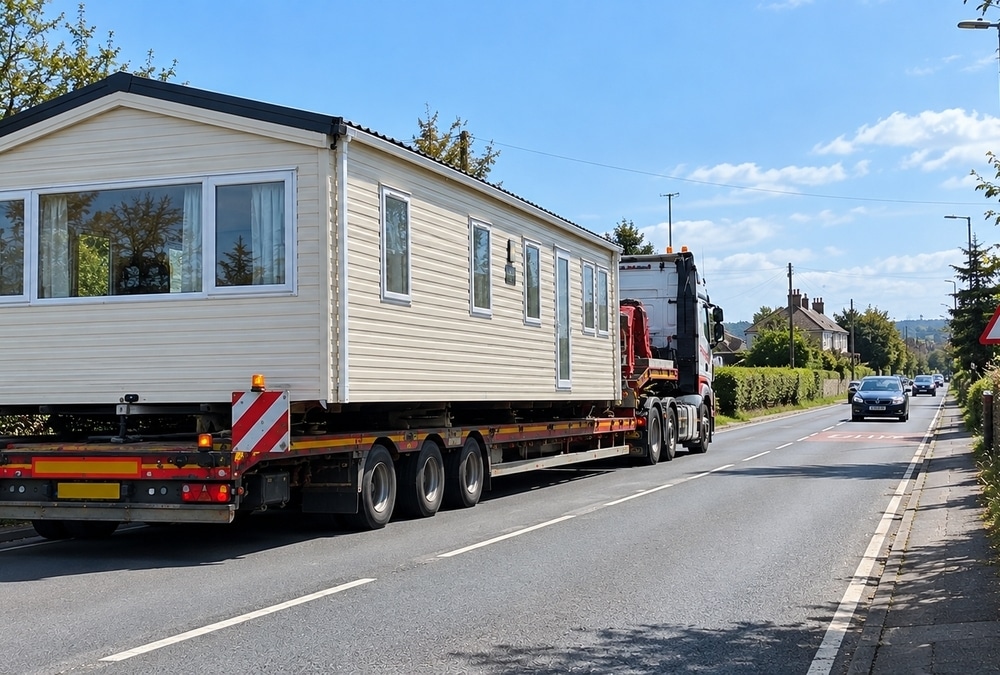
So, how much does it cost to move a static caravan? For most owners in the UK, the typical total lands between £1,500 and £5,000, once transport, disconnection and reconnection are all added up.
Short local moves can come in nearer the bottom of that range, while long-distance moves, wide-loads and twin-unit lodges push the bill much higher.
The trouble is that there is no single price. Static caravans aren’t road-legal for towing, so they need specialist low-loader lorries, lifting equipment and proper route planning.
The final cost is a mix of haulage, groundwork and park fees, and it all depends on your caravan and where it’s going.
In this blog, we’ll break down each cost so you know what to expect before you start planning your move.
The Short Answer: Typical Static Caravan Moving Costs
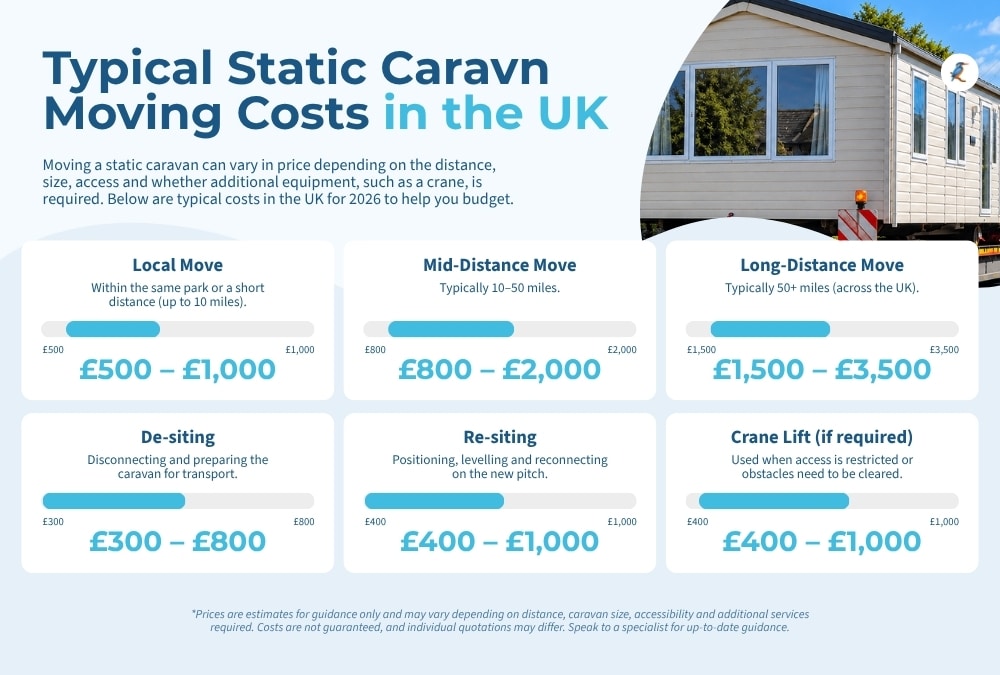
Here’s a quick look at what you can expect to pay in 2026. These are estimates, and the exact figure will depend on your caravan and where it’s going.
| Cost | Typical price | What it covers |
|---|---|---|
| Local transport (up to 30 miles) | £600 to £1,200 | Short moves, though most hauliers have a minimum charge of around £250 to £500 |
| Mid-distance transport (31 to 80 miles) | £1,100 to £2,400 | Regional moves |
| Long-distance transport (100 to 150+ miles) | £1,900 to £4,500+ | Cross-country journeys |
| Disconnection (de-siting) | £300 to £1,200 | Disconnecting gas, electric and water, and removing the unit from its pitch |
| Reconnection (re-siting) | £300 to £1,200 | Levelling, jacking and reconnecting utilities, including safety testing |
| Crane lift (if needed) | £400 to £1,200 | Tight spaces or soft ground that stop standard loading |
Some hauliers also quote per mile, and rates tend to run from roughly £1.50 to £5.50 a mile depending on the width of your caravan. It’s worth knowing that the cost is rarely just a mileage rate.
It’s a combination of transport fees and park-specific charges, which is why two moves of the same distance can end up costing very different amounts.
What Affects the Cost of Moving a Static Caravan?
A few key factors decide where your quote ends up in that range.
Caravan width
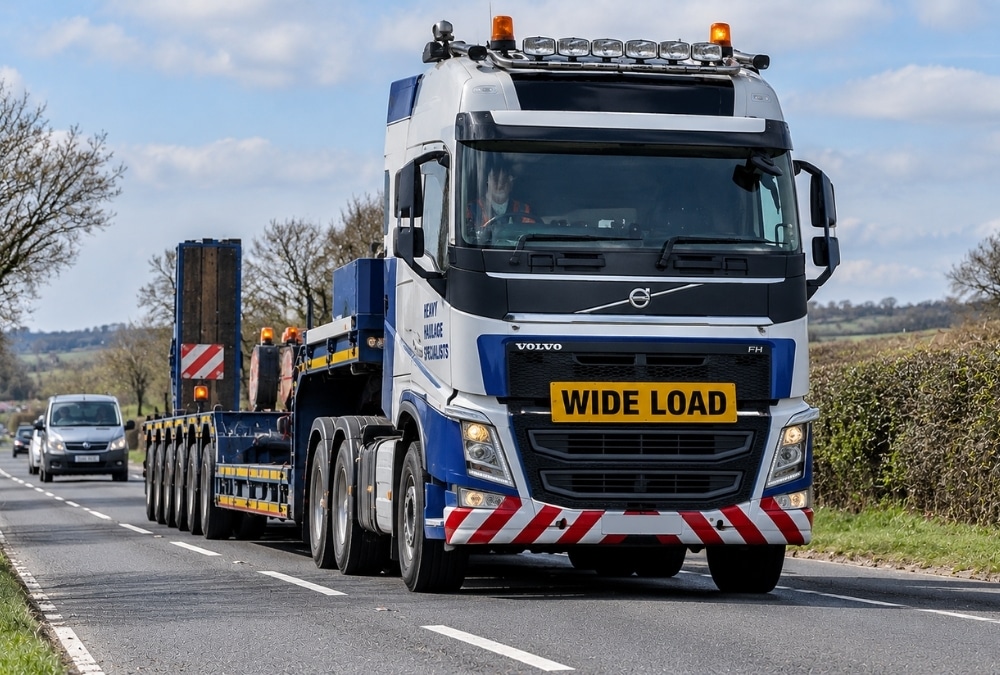
Width is the big one. A 10ft-wide caravan is cheaper to move than a 12ft or 14ft model, which need specialist wide-load set-ups.
Any load wider than 2.9 metres requires an abnormal load notification, and if your caravan is over 3.5 metres wide you will likely need an escort vehicle. That can add around £300 to £600 per day to your quote.
Distance
The further you go, the more you’ll pay in haulage, fuel and driver time. Moving within the same park is usually the cheapest option, while a cross-country move sits at the top end of the scale.
Twin-unit lodges
Moving a twin-unit lodge is a different job entirely. It has to be split in two, moved as two separate loads and then structurally re-joined at the other end.
That roughly doubles the transport cost, and the de-siting and re-siting fees alone can climb to £4,000 to £5,000.
Access and ground conditions
If your pitch is tight, surrounded by other caravans or sits on soft ground, a standard lorry may not be able to load your caravan. In that case a crane lift is needed, which adds anything from £400 to £1,200.

The age and condition of your caravan
Older caravans can be harder and riskier to move. If your unit is showing its age, it may be worth getting a caravan inspection before you book transport, so there are no nasty surprises when it’s lifted.
It’s also worth checking that your caravan is covered while it’s in transit. Our overview of static caravan insurance explains what’s usually included.
Don’t Forget the Park Fees
The haulage bill is only half the story. Many commercial holiday parks charge a one-off premium, sometimes called a “bring-on” fee, just to allow an outside caravan onto their grounds.
In some cases that fee can run as high as £10,000, which is far more than the move itself. That’s why you should always check the new park’s charges before you book a haulier.
If you’re comparing sites, our look at the true cost of owning a static caravan in the UK shows how pitch fees, insurance and other running costs stack up on top of the move.
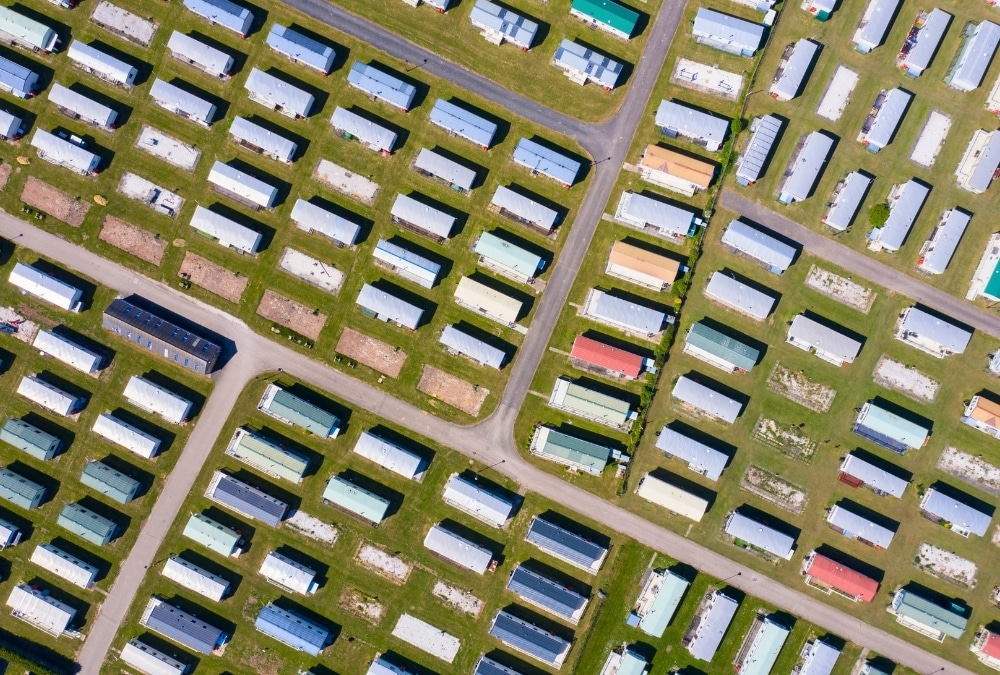
If you’re thinking of moving to Ingoldmells on the Lincolnshire coast, Kingfisher Caravan Park can make this much simpler.
We take care of the relocation process, including arranging the transport, so you aren’t left coordinating it all yourself.
Whichever park you choose, read the pitch agreement carefully before you commit. Our look at what to look for in a static caravan contract covers the clauses worth checking.
Check the 10-Year Rule Before You Move
Before you pay for any transport, make sure your destination park will actually accept your caravan.
Many parks operate an age limit, often called the 10-year rule, and refuse caravans that are older than 10 to 15 years. If your caravan doesn’t meet the park’s standard, you could pay to move it and then be turned away.
It’s one of the main reasons people weigh up moving against replacing. If your caravan is getting on, it can be worth reading about the benefits of buying new or used before you spend thousands on a move.
If your caravan is close to or over the age limit, you could browse the static caravans for sale at Kingfisher instead.
And if you plan to use your caravan as more than a holiday home, check whether you can live in a static caravan and the legal requirements of owning a caravan before you move.
What to Budget for Your Move
Expect roughly £1,500 to £5,000 all-in for a standard move, more for wide-loads or twin-unit lodges, and always factor in the new park’s fees alongside the haulage.
The best way to keep costs down is to plan early and confirm your destination park will accept your caravan before anything is booked.
If you want to work out what’s realistic first, our overview of static caravan finance can help. And if the Lincolnshire coast is on your list, we’d love to hear from you at Kingfisher Caravan Park.