

Thinking about owning a static caravan? It’s easy to see why the idea is so appealing — a personal getaway in a scenic location, ready whenever you fancy a break.
But before you sign anything, it pays to understand the legal side of static caravan ownership: pitch agreements, insurance, tax, and health and safety rules all play a part in protecting your investment.
This guide covers everything you need to know about the legal requirements of owning a static caravan in the UK, including the rules that changed in 2024 and 2025, so you can buy with confidence and avoid costly surprises later on.
Important: This article is provided for general information only and should not be considered legal, tax or financial advice. Laws, planning regulations and caravan park rules can vary depending on your location and circumstances. Always seek advice from a qualified solicitor, accountant or relevant professional before making decisions regarding static caravan ownership.
Reviewed: June 2026
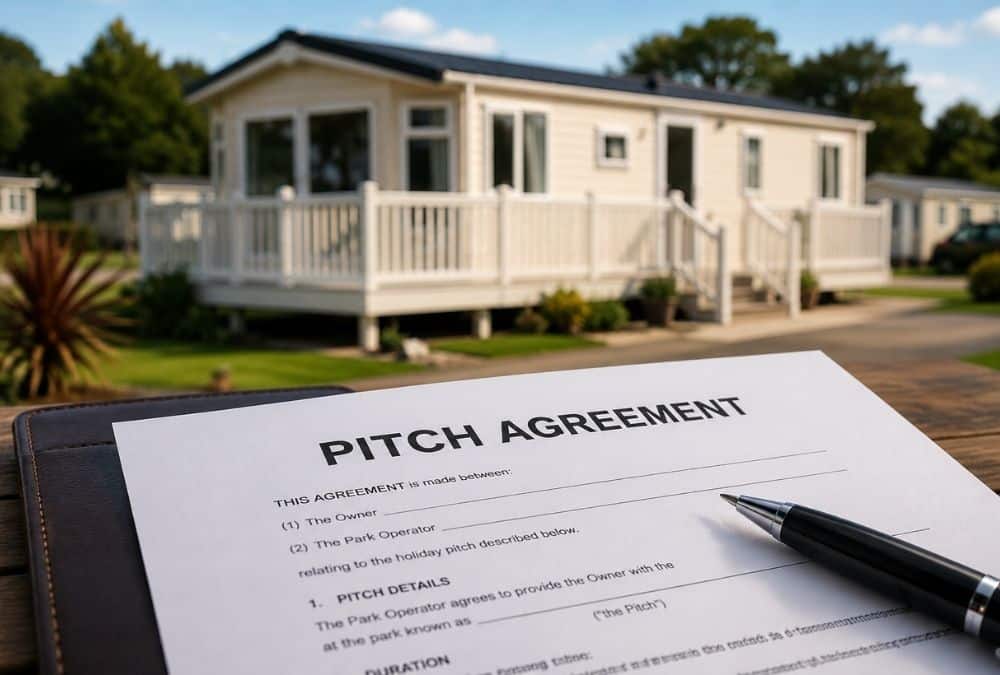
Pitch Agreements: What Every Static Caravan Owner Should Check
One of the most important documents you’ll deal with as a static caravan owner is the pitch agreement with the park.
This sets out the terms under which your caravan sits on the park’s land, and it governs your relationship with the park operator for as long as you own the caravan.
What Is a Pitch Agreement?
A pitch agreement is a contract between you and the caravan park covering the use of a specific plot.
Holiday caravan pitch agreements aren’t covered by the same statutory protections as residential park homes (those fall under the Mobile Homes Act 1983 and 2013), so it’s especially important to read the small print carefully before you buy.
At a minimum, check that the agreement clearly sets out:
- Duration: how long you can keep your caravan on the pitch, and what happens at renewal.
- Pitch fees: the cost of renting the pitch, the payment schedule, and how future increases are calculated.
- Access rights: your rights to use the park and pitch, plus any restrictions that apply.
Key Terms to Look Out For
When you’re reviewing a pitch agreement, pay close attention to:
- Renewal and termination clauses: the conditions under which the agreement ends or renews, and any penalties involved.
- Maintenance responsibilities: who looks after the pitch and shared infrastructure, such as utilities and landscaping.
- Usage restrictions: age limits on caravans, occupancy rules, and what modifications are allowed.
- Insurance requirements: whether the park sets minimum cover levels you or the operator must meet.
- Resale and transfer terms: many parks require permission before you sell your caravan on-site, and some restrict sales to park-approved buyers or charge commission.
Rights and Responsibilities
As the caravan owner, you have the right to use your pitch as agreed, enjoy the park’s amenities, and expect a fair standard of service and maintenance.
In return, you’re expected to follow the park’s rules, keep your caravan in good condition, and pay fees on time.
The park operator is responsible for maintaining the overall site, providing utilities, and meeting health and safety obligations. They also have the right to enforce park rules and, in line with the agreement, request removal of a caravan or increase pitch fees.
It’s also worth understanding how pitch agreements fit into the wider buying process.
If you’re still researching ownership, our guide to buying a static caravan explains what to consider before making a purchase, from choosing the right park to understanding ongoing ownership costs.
Note: a park can’t legally evict a static caravan owner without following the correct procedure. If you believe you’ve been treated unfairly, you may be able to challenge the decision.
Static Caravan Insurance: Legal Requirements vs. Recommended Cover

There’s no specific UK legislation that makes static caravan insurance compulsory.
In practice, though, almost every caravan park will insist on proof of adequate cover before allowing your caravan on site — so for most owners, it’s a requirement in all but name.
A typical static caravan insurance policy includes:
- Building insurance: covers the structure against fire, vandalism, and weather damage.
- Contents insurance: covers personal belongings and furnishings inside the caravan.
- Public liability insurance: covers you if someone is injured, or their property damaged, due to your negligence.
- Accidental damage cover: an optional extra for unintended mishaps not covered by a standard policy.
- Removal and transit cover: worth considering if you ever need to move the caravan.
Tips for Choosing the Right Policy
- Assess your needs: work out the value of your caravan and contents, and consider risks specific to your location, such as flooding or coastal weather.
- Compare providers: shop around for the best combination of cover and price.
- Check inclusions and exclusions: read the policy wording carefully so there are no gaps in cover.
- Review policy limits: make sure the sums insured reflect the full value of your caravan and its contents.
Insurance costs are just one part of the overall running costs of ownership. You may also want to read our guide on how much it costs to own a static caravan.
Static Caravan Tax Implications: Council Tax, Business Rates and the 2025 FHL Changes
Tax is one of the areas of static caravan ownership that’s changed the most recently, so it’s worth getting up to speed.
Council Tax vs. Business Rates

If you use your static caravan as a permanent residence, it may be liable for council tax, assessed on the property’s value and location.
Some parks build council tax into the pitch fees, so check with the operator.
If you let your caravan out commercially to holidaymakers, it’s more likely to fall under business rates, based on its estimated rental value and reassessed periodically.
How Caravan Use Affects Your Tax Position
If your caravan is purely for personal use, council tax (where applicable) is usually your main consideration.
If you rent it out, you’ll need to register for business rates, and you may also need to consider VAT if your rental income passes the VAT threshold.
The Furnished Holiday Lettings (FHL) Regime Has Ended
If you let out your static caravan and previously relied on Furnished Holiday Lettings tax treatment, this is important: the FHL regime was abolished from 6 April 2025 for Income Tax and Capital Gains Tax (1 April 2025 for Corporation Tax).
Income from letting your caravan is now taxed under ordinary UK property income rules rather than the old FHL rules.
In practice, this means mortgage and finance cost relief for individual owners is now restricted to the basic rate of Income Tax, and the previous FHL capital allowances treatment no longer applies to new furniture, fixtures and equipment bought after the change.
You can still sublet your caravan — you’ll just need to keep clearer records of income, expenses and finance costs for your accountant.
If you’re considering generating income from your caravan, it’s important to understand the wider responsibilities involved. Our article on subletting out a static caravan explores some of the practical considerations for owners.
Possible Exemptions and Reliefs
Some holiday caravans may qualify for reduced rates if used seasonally or as a secondary home, and small businesses letting out caravans may be eligible for business rates relief in certain circumstances.
Because tax rules depend heavily on individual circumstances, it’s worth speaking to a qualified accountant rather than relying on general guidance alone.
Planning Permission and the 10-Year Rule
If you’re considering living in a static caravan rather than using it purely for holidays, planning permission is a key legal consideration — and the rules here changed in 2024.
What Is the 10-Year Rule for Caravans?
The so-called “10-year rule” allows unauthorised residential use of land or a structure, including a static caravan, to become immune from planning enforcement once it has continued, unbroken, for 10 years without enforcement action.
Since April 2024, this 10-year rule applies to new cases of unauthorised residential use of static caravans in England, replacing the previous 4-year rule for this type of use.
What Happened to the 4-Year Rule?
The old 4-year rule still applies, but only where residential use of the caravan began before April 2024 — in other words, it’s now a transitional provision rather than the general rule.
In Scotland, a 4-year rule can still apply, but only where the caravan is judged to have become a building or dwelling (for example, fixed to the ground and connected to services).
If you’re buying a caravan to live in on private land rather than on a licensed holiday park, always check with your local council before assuming any existing use is lawful, since enforcement, fines or removal can follow if it isn’t.
Health and Safety Regulations for Static Caravan Owners

Keeping your caravan safe isn’t just good practice — it protects you, your family, and your investment.
What Caravan Parks Must Provide
- Site safety: regular inspections of park amenities and facilities to meet safety standards.
- Emergency procedures: clear evacuation plans, signage, and trained staff.
- Fire safety: fire extinguishers, smoke alarms, and staff fire training across the park.
- Hygiene standards: clean, well-maintained shared facilities, toilets and showers.
Your Responsibilities as the Owner
- Smoke alarms and fire extinguishers: check regularly that they’re in working order and serviced.
- Structural checks: look out for loose steps, damaged handrails or other hazards.
- Electrical systems: test regularly and use a qualified professional for any repairs.
- Gas appliances: check connections for leaks, service them regularly, and ensure good ventilation.
- Water systems: inspect for leaks or blockages, and clean filters and connections to protect your water supply.
Promptly report any safety concerns to park management, and keep up with any specific health and safety requirements set by the park or your local authority.
Utility Connections and Environmental Rules

Proper management of utilities and environmental compliance is part of responsible static caravan ownership.
- Water supply: make sure your connection is legal and clearly documented, and check regularly for leaks.
- Electrical connections: verify they meet current safety standards, and consider upgrades where needed.
- Waste disposal: separate recyclables from general waste and use the park’s collection service or local facilities.
- Environmental impact: follow park guidelines designed to protect local wildlife and habitats, and keep noise within agreed limits.
- Pollution control: store and manage fuel or chemicals responsibly.
Frequently Asked Questions About Static Caravan Legal Requirements
What is the 4-year rule for caravans?
The 4-year rule allowed unauthorised residential use of land or a caravan to become immune from planning enforcement after four continuous years without council action.
Since April 2024, this has been replaced by a 10-year rule for new cases in England; the 4-year rule now only applies where the residential use began before that date.
What are the new rules for static caravan owners?
The most significant recent changes are the move from the 4-year to the 10-year planning enforcement rule for unauthorised residential use (April 2024) and the end of the Furnished Holiday Lettings tax regime (April 2025), which changed how letting income from static caravans is taxed.
There’s still no dedicated UK statute regulating static caravans generally, so most protection comes from consumer law, the Mobile Homes Act, and your individual pitch agreement.
What do I need to own a static caravan?
You’ll need a pitch agreement with a licensed caravan park (or planning permission if siting it on private land), adequate insurance — even though it isn’t a strict legal requirement, most parks insist on it — and a clear understanding of your tax position depending on whether you use the caravan personally or let it out.
Budgeting for ongoing pitch fees, maintenance and safety checks is essential too.
Final Thoughts
Once you’ve understood the legal requirements, the next step is finding the right park and caravan.
Whether you’re looking for a family holiday base or a long-term leisure investment, take a look at the static caravans currently available for sale at Kingfisher Caravan Park.